June 30th, 2026
50 Years of Deadly: A Legacy of Opportunity

For 50 years, NAIDOC Week has recognised the strength, leadership and enduring cultural legacy of Aboriginal and Torres Strait Islander peoples.
This year's theme, 50 Years of Deadly, celebrates the generations of Aboriginal and Torres Strait Islander peoples who have fought to keep culture strong, create opportunities for future generations and shape conversations around reconciliation, inclusion and community across Australia. It is both a celebration and a call to continue the work, to listen more deeply, act more thoughtfully and build a future shaped by connection, respect and shared responsibility.
At FDC, we believe the legacy of a project extends beyond the physical build. It is shaped by the relationships we create, the voices we learn from and the opportunities we help unlock for communities long after construction is complete.
On Queensland's Sunshine Coast, Aura Town Centre tells a story of what can happen when community, partnership and respect sit at the heart of a project.
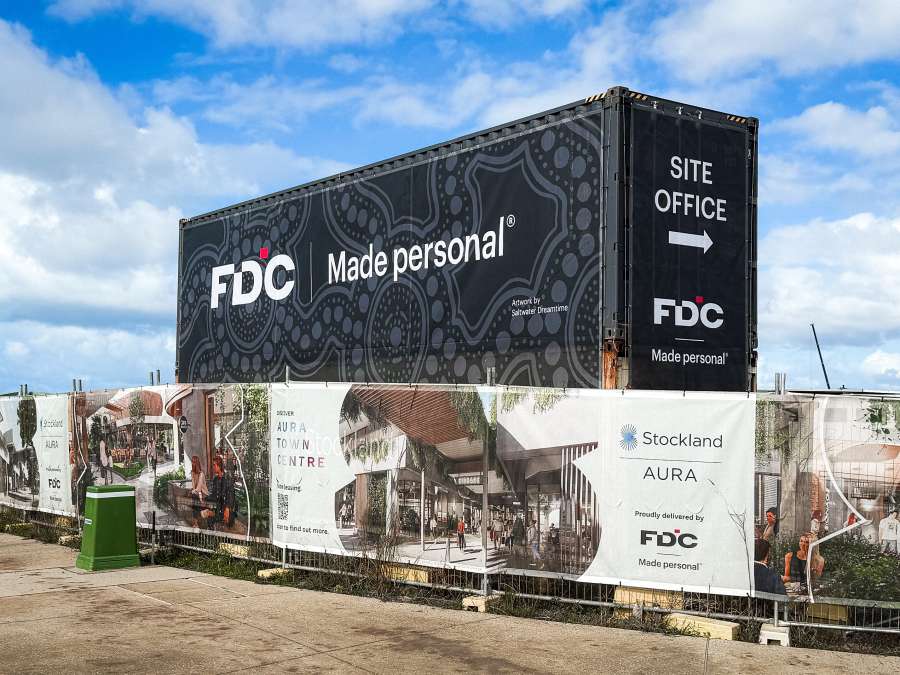
Delivered for Stockland as part of the broader Aura masterplanned community, one of Australia's largest residential developments, the new precinct will provide essential retail, health and lifestyle services for a rapidly growing region. From the outset, the project was approached with an understanding that it sits on Country, not simply as a project location, but within a living cultural and community context.
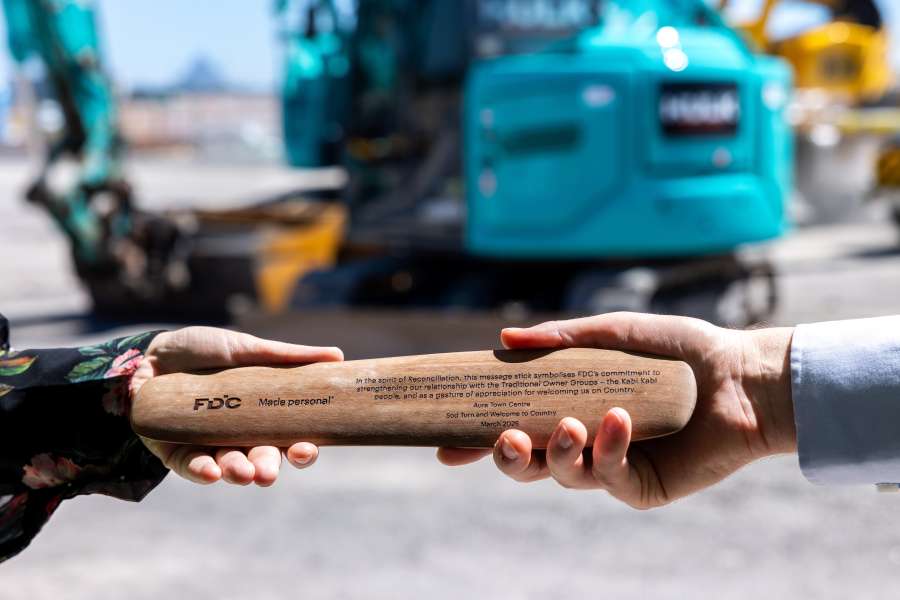
That understanding was reflected in the way the project began. A Smoking Ceremony marked the commencement of works, acknowledging Traditional Owners and establishing a foundation of respect and collaboration. The project team also created message sticks, presenting them to Traditional Custodians and Stockland as a gesture of gratitude and a commitment to approach Indigenous engagement with genuine intent.
For Luke Broadhurst, FDC Queensland Construction Manager, reconciliation is not something that exists in isolation from project delivery.
“There's a lot of discussion in industry and a lot of box-ticking from companies,” he says. “For us, it's about what we do as a business the entire year-round, engaging with Aboriginal and Torres Strait Islander peoples and making decisions on who we work with.”
It Starts with Listening
At the centre of this approach is listening, an ongoing process of understanding and learning from Indigenous voices and perspectives. FDC engaged Indigenous consultant James Alley, Director of AJA Solutions, early in the planning process. His role extends beyond helping the project meet procurement targets. He works alongside the project team and subcontractors to build understanding, identify opportunities and strengthen Indigenous participation throughout the supply chain.
“For a long time, Indigenous companies have been an afterthought,” says James. “Many Indigenous businesses are engaged at delivery stage and not at tender stage. The opportunity to create meaningful outcomes starts much earlier than that.”
By establishing a framework and strategy well before construction commenced, the project team has been able to create pathways for Indigenous businesses, suppliers and workers to participate throughout the life of the project.
For both FDC and AJA Solutions, participation targets provide accountability, but genuine engagement requires a broader perspective.
“Often, it's about starting the conversation," says Luke. “Some suppliers and subcontractors haven't previously engaged with Indigenous procurement initiatives or understand the opportunities they can create. James has helped bring people on that journey and build a shared understanding of why it matters. “The impact, says James, extends well beyond a single project”.
“You're helping someone who's probably been unemployed for a long time become employable again. You're supporting Indigenous businesses and putting money back into community. There's a knock-on effect. You're creating opportunities that benefit families, businesses and communities."
Building Community
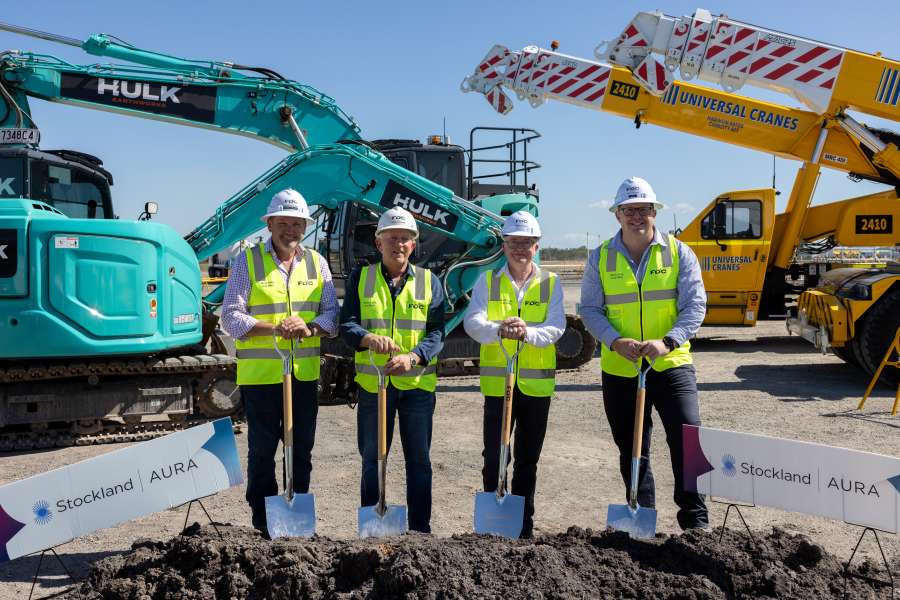
For Stockland, projects such as Aura Town Centre are about creating communities where people can see themselves reflected in the places they live, work and gather.
“At Stockland, our purpose of ‘a better way to live’ aligns strongly with a vision to build connected communities with people at the heart and focus of that,” says Holly Johnson, Indigenous Engagement Manager for Queensland and WA.
“We know that when you approach a development like that, it contributes to a just, equitable and reconciled Australia. We focus on creating places that deliver lasting cultural, social and economic value across our communities.”
“Creating those relationships starts with listening and learning,” says Holly. “Sitting down with Traditional Owners, Indigenous businesses and community stakeholders, understanding the First Nations histories, the different cultures that exist, the knowledge that's held locally and the community aspirations.”
“The fact that FDC recognised the need to have a specialist Indigenous consultant on the project not only to ensure commitments are met, but also that there is a genuine intent to build sustainable relationships and outcomes alongside community, is where the alignment comes in,” she says. “We can see there's a genuine effort and desire to do things the right way and to walk in partnership with community.”
One of the strongest themes to emerge from Aura Town Centre is the importance of relationships. For Luke, relationships create the foundation for honest conversations, shared goals and meaningful outcomes. “Relationships break down barriers,” he says. “If you've got a relationship with somebody, it allows open discussions and communication.”
James agrees. “Indigenous companies don't want to just work on one project,” he says. “They want to build a relationship with the company they're working with and get ongoing work as well to build their capability and grow their business.” Trust, he says, is central to that process. “If that trust isn't there, then the whole thing breaks down.”
The result is a shift away from transactional engagement and towards long-term partnerships built on shared understanding and mutual benefit.
Beyond the Project
NAIDOC Week provides an opportunity to celebrate culture, achievement and progress. It is also a reminder that reconciliation is an ongoing journey. For FDC, projects like Aura Town Centre demonstrate how that journey continues to evolve, through listening, learning, collaboration and a commitment to creating opportunities beyond the physical build.
For Holly, the true legacy of projects like Aura will be measured long after construction is complete.
“I'll be so proud when the Aboriginal and Torres Strait Islander stakeholders we've worked with on this project can take their kids to this shopping centre and say, “Mum did the landscaping on this, “or 'Dad contributed to the artwork here',” she says.
“For the local community, knowing there's an Indigenous footprint in and throughout that development is something we can really be proud of.”
The most meaningful legacy is still to come.
“For some Indigenous kids, their first jobs will be at this town centre. What a lasting legacy that is. We're creating employment opportunities for the growing youth demographic of Aboriginal and Torres Strait Islander people here on the Sunshine Coast,” says Holly.
Because ultimately, meaningful reconciliation is not defined by what is built, but by how it is built, and by the relationships, opportunities and communities that continue to grow long after construction is complete.