October 22nd, 2026
A Place to Call Home
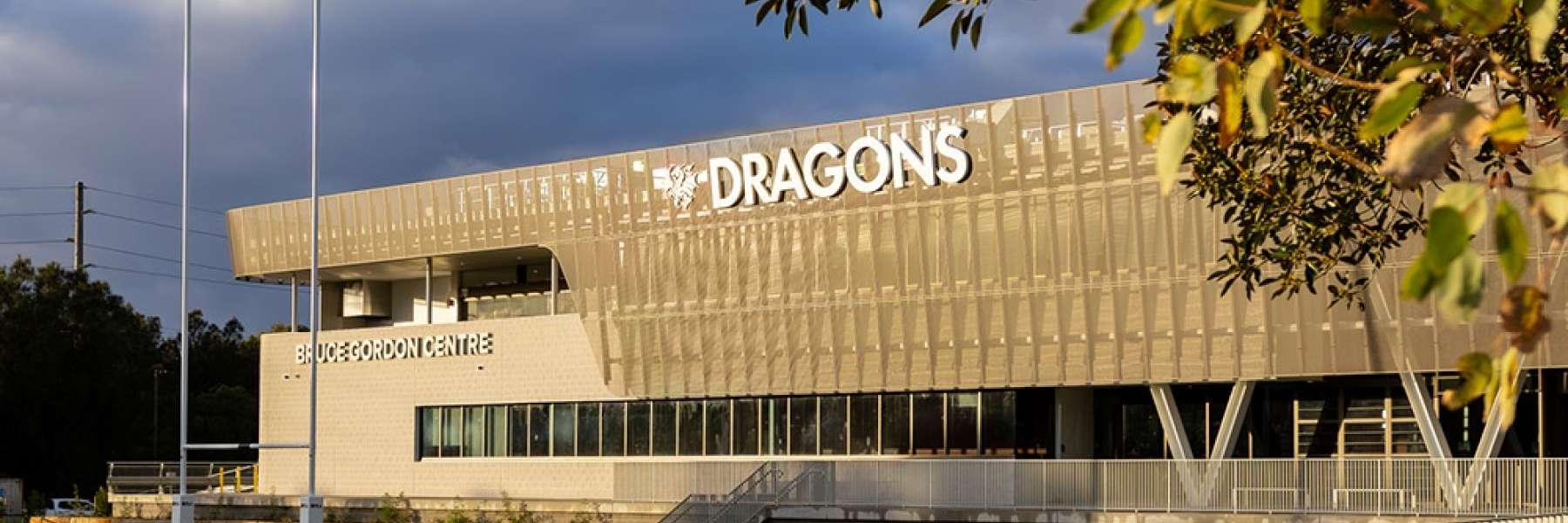
Some buildings accommodate an organisation; others change it. For the St George Illawarra Dragons, the Bruce Gordon Centre is proving to be the latter.
For much of the club’s 25-year history, its people were physically divided. Football operated from the back of WIN Stadium in Wollongong, community and resourcing teams worked from the nearby Steelers Club, while much of the administration remained in Kogarah.
For the first time, players, coaches, administrators and community teams share a home. Tim Watsford, CEO of the St George Illawarra Dragons, admits he even underestimated what that would mean.
“The word ‘connected’ gets thrown around a bit, but that’s effectively what a good sporting culture or a good high-performance culture has: an element of connectivity,” he says.
“The fact that we’re under one roof, I’ll be honest, even took me by surprise at how much it can foster an inclusive environment for both football and admin to know what each other are doing.”
This shift shows up in small, everyday interactions as much as in the big ones. The head coach is now metres from the CEO. Players stop at the desks of commercial and membership staff, and departments that once operated in separate buildings now cross paths throughout the day.
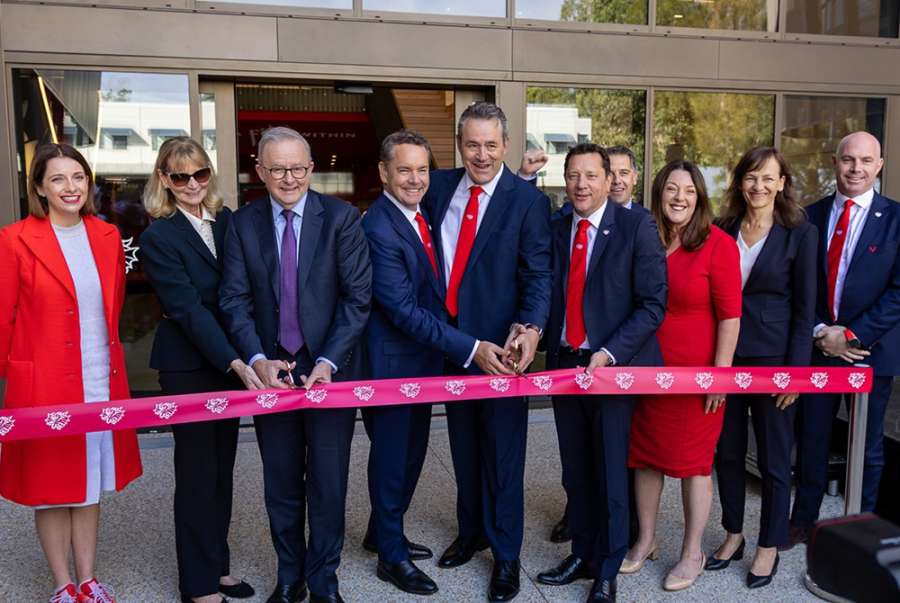
More than bricks and mortar
The building was deliberately designed without the physical hierarchies that can reinforce those divisions. Football and administration occupy the same level, executives are accessible rather than removed, and shared spaces encourage people to meet.
“Everyone being equal is a key point,” Tim says. “It’s definitely driven a sense of connectivity right across our business from day one.”
For FDC Project Director Troy Thomas, there was a moment that truly brought that sense of connection into focus. Shortly after opening, the Dragons were due to hold their inaugural captain's run at WIN Stadium, the club's longstanding and much-loved home ground. Instead, the players made a different decision.
“The decision was made by the players that ‘we now have a new home’ and the captain’s run took place at The Bruce Gordon Centre,” he recalls. “That’s when it truly sunk in that we'd helped create a home for the Dragons community.”
A home worthy of the club
Set within the University of Wollongong Innovation Campus in North Wollongong, the $69 million Bruce Gordon Centre spans 38,000 square metres and brings together elite training, recovery, administration, education and community facilities in one precinct.
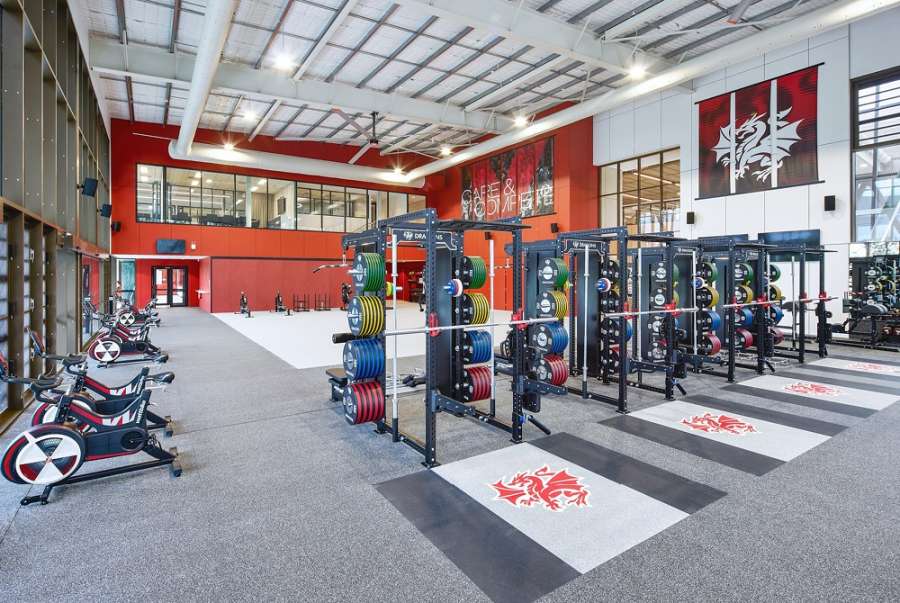
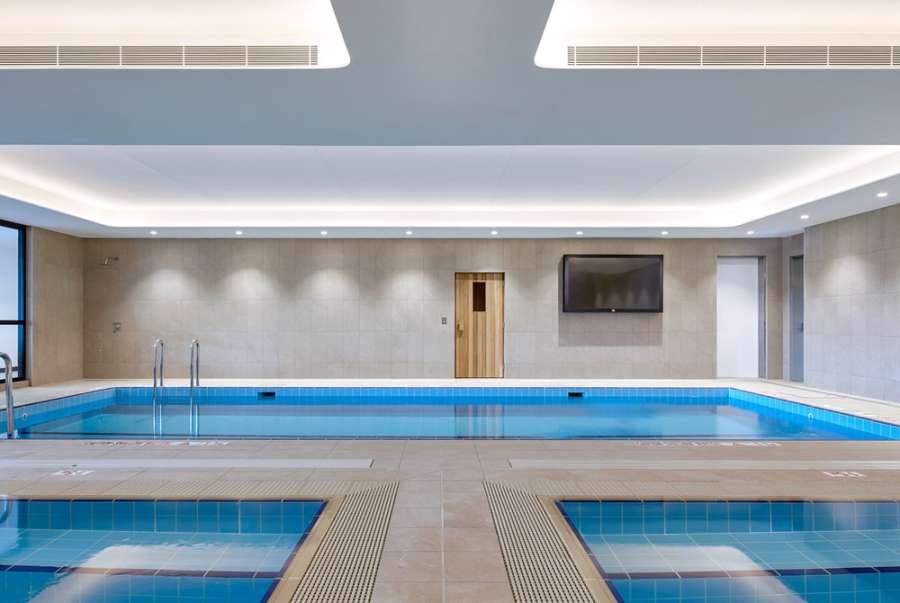
There is a world-class strength and conditioning gym, medical and recovery facilities, aquatic recovery areas and a sauna, lecture and meeting spaces, administrative areas, and two full-sized rugby league fields, one dedicated to elite training and the other deliberately created for community use.
“We’ve promoted ourselves as being a big club and a proud club,” Tim says. “Now we’ve got the home to prove it.”
The sense of pride is palpable. Tim recalls coming into the centre over Easter, during what had been a challenging period for the club, expecting to find it virtually deserted.
Instead, members of both the men’s and women’s playing groups were there on Easter Monday, spending time together in their respective spaces despite having the day off.
“It’s an environment they want to be part of,” he says. “I walked away thinking, ‘That’s pretty cool, the fact they actually want to come in and spend more time around their facility.’”
Building aspiration
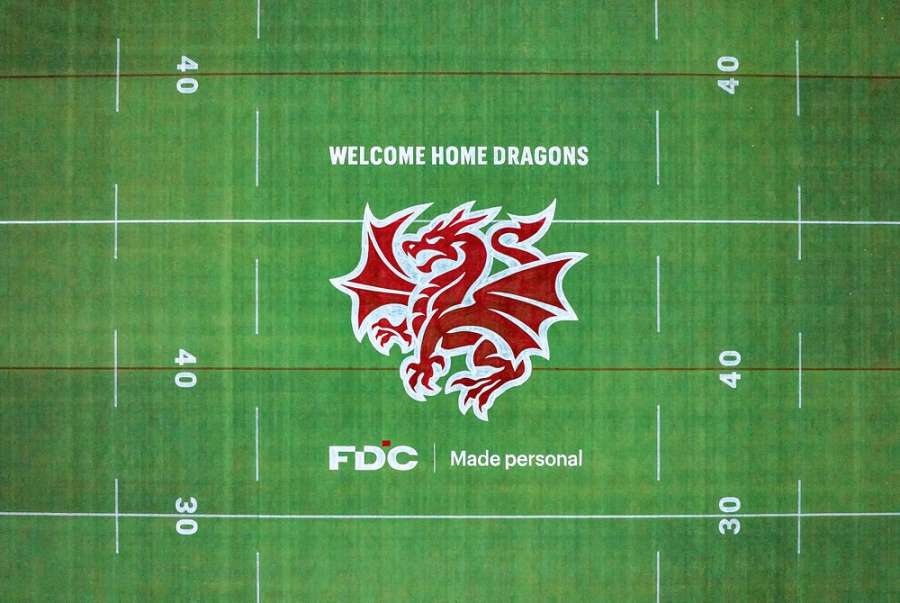
From the earliest stages of the project, the community field was considered as important to the vision as the elite field. FDC designed and constructed both to exacting standards, with the community field supported by dedicated change facilities and carefully planned access that allows local users to move through the centre without entering NRL and NRLW areas. It’s already hosting community sport, with plans to expand its use.
An operational childcare centre sits between the elite and community fields: young children can look one way and see professional athletes training, and the other and see members of their own community playing sport.
During construction, FDC also engaged those children in the project, bringing out miniature hard hats and vests and introducing them to the machinery helping transform the site. It is a small detail, but one that captures a much larger ambition: that this should be a place young people in the Illawarra can see themselves in. “It provides the ultimate aspiration,” Tim says. “You look at it and think, ‘This is what we can be.’”
That aspiration extends beyond a pathway to professional rugby league. A young person might imagine becoming an NRL or NRLW player, but equally they might see a future in sports science, coaching, nutrition, high performance, administration or the many other disciplines that surround elite sport.
Equality you can see
For young female athletes in particular, the message is clear. The centre has been designed around equitable provision for the NRL and NRLW programs. While the teams have their own change rooms, they share the same performance environment: the same gym, recovery areas, hot and cold pools and saunas, and the same standard of support.
For Tim, the next generation should be able to see equality for themselves. His daughter’s response to the facility has stayed with him: a sense of ‘wow, these are the avenues available to me’.
“It’s aspirational for young girls wanting to play professional sport and have an environment that’s a counterpart to their male players,” he says.
Sport meets education
The centre’s location on the University of Wollongong campus opens another set of possibilities. The partnership places elite sport alongside education and research. Classrooms and community spaces within the centre create opportunities for learning alongside training, while its proximity to the university offers potential collaboration across medical research, exercise science, high performance, nutrition and other disciplines.
The high-performance program is engaging prospective interns, while a three-day-a-week education program planned for 2027 is expected to bring around 20 students into the centre as their base. Pathways through the SEDA program could also help students bridge into further tertiary study and careers within sport.
Outside the classroom, the possibilities are endless: junior carnivals, touch football competitions, school programs, fitness testing and broader initiatives encouraging children to be active, some connected to rugby league, others simply to sport, health and participation.
In that sense, the centre blurs the traditional boundaries of a professional sporting facility. It is simultaneously a workplace, training ground, classroom, community venue and a visible point of connection between the Dragons and the region they represent.
Built with care
Delivering that vision was not without complexity. FDC constructed the centre on a flood-prone site within an active university campus, immediately beside an operating childcare centre, above a major Sydney Water asset and within a catchment draining to a sensitive coastal wetland. The building and suspended car park required carefully integrated flood-resilient design, while the playing fields themselves form part of the site's flood-storage strategy.
“Every project has its challenges, but building the elite training field over a major Sydney Water sewer easement was definitely one of the more unique ones,” says Troy. “The team did a terrific job working through those constraints while also managing an active university campus and childcare centre right beside us.”
The two fields required remediation, specialist drainage and irrigation, engineered ground preparation and high-quality turf systems. Throughout construction, access to the university and childcare centre had to continue safely with minimal disruption.
“I'm especially proud of the field construction,” Troy says. “It wasn't an off-the-shelf solution. It was tailored specifically to the Dragons' performance requirements and seeing that vision come to life was pretty rewarding.”
Innovation elsewhere in the build helped accelerate delivery. By redesigning the above-ground structure, FDC could construct the roof and Level 1 simultaneously, achieving an earlier watertight building and bringing the construction program forward. The result was delivering the project six weeks ahead of schedule, allowing the Dragons to move in for the start of the football season.
For Tim, that efficiency was matched by a genuinely collaborative working relationship.
“Easy would be the best way to describe it,” he says. “If we had questions, nothing was too hard. We did everything in collaboration, and it was such a fun project to be on.”
That relationship became personal, too. FDC Project Manager Kane Sissons is local to the region, and Tim believes the pride of creating something in his own community was felt throughout the project.
“The guys that we worked with on a day-to-day basis wanted it to be the best as well,” he says. “There’s a personal pride around developing something in his community that you can’t really put a price on.”
For many of the FDC team, it was more than just another construction project. “We had people on the team who live locally, have kids in local sport and understand what the Dragons mean to the community,” says Troy. “That gives you a real sense of responsibility. You know you're building something people will use, be proud of and talk about for years.”
That approach mirrors one of the Dragons’ own high-performance values: care and compete. “Care for your jersey, care for your teammate, care for your club; compete for your jersey,” Tim explains. “It was completely replicated from the FDC side. That’s Kane’s care and the pride that he has in building something in his backyard. You can see it.”
The new Dragons
The Bruce Gordon Centre is still young. Its community programs will grow; its relationship with the university will deepen; students who are children today may one day study, train or work there. For the Dragons, it is already the physical expression of a club seeking to move into a new era. “The centre should mark what the new Dragons is,” Tim says. “Together with having bricks and mortar and a place to call home, we’ve driven an enormous change on and off the field as well.”
For the Illawarra, that home creates something permanent: a place where school groups can visit, local teams can play, students can learn and young people can imagine themselves becoming part of the story.
“From a community perspective, there’s now a bricks-and-mortar point in the heart of the Illawarra that kids can aspire to and be part of,” says Tim.
And for Troy and the FDC team, contributing to something with such lasting significance is not lost on them.
“The Bruce Gordon Centre gives the Dragons and their junior pathways every opportunity for success. If it's helping develop future players, strengthening community connections and contributing to premierships for years to come, then it's doing what it was built to do,” he says. “We're proud to have played a small part in that journey.”