The Business of Building Trust
As FDC marks 35 years, founder Ben Cottle reflects on the values that took the company from a recession-era gamble to a nationally respected name.
For the latest news and updates, subscribe to the MADE Newsletter
When an under-utilised Ashfield site began its next chapter, few could have imagined it would become the Southern Hemisphere’s largest ‘meanwhile use’ housing initiative, providing safe accommodation for more than 100 people experiencing homelessness every night. ‘Meanwhile use’ projects repurpose empty or underutilised buildings while longer-term plans progress and the Inner West Project is in direct response to New South Wales’ housing and domestic violence crisis, showing how dormant spaces can be transformed into places of care. It also demonstrates the impact of partners uniting around a clear purpose, contributing not only funding, but time, skills and humanity, ensuring giving is more than financial, but something deeply personal.
Spanning government, community organisations, the private sector and FDC’s long-standing subcontractor family, the project has delivered more than safe beds. It also offers stability, dignity, routine and a sense of possibility to women, children, transgender people and men in crisis. Across its apartments, former hospital buildings and support spaces, the initiative has created more than 36,500 safe nights annually.
Collaboration on a Grand Scale
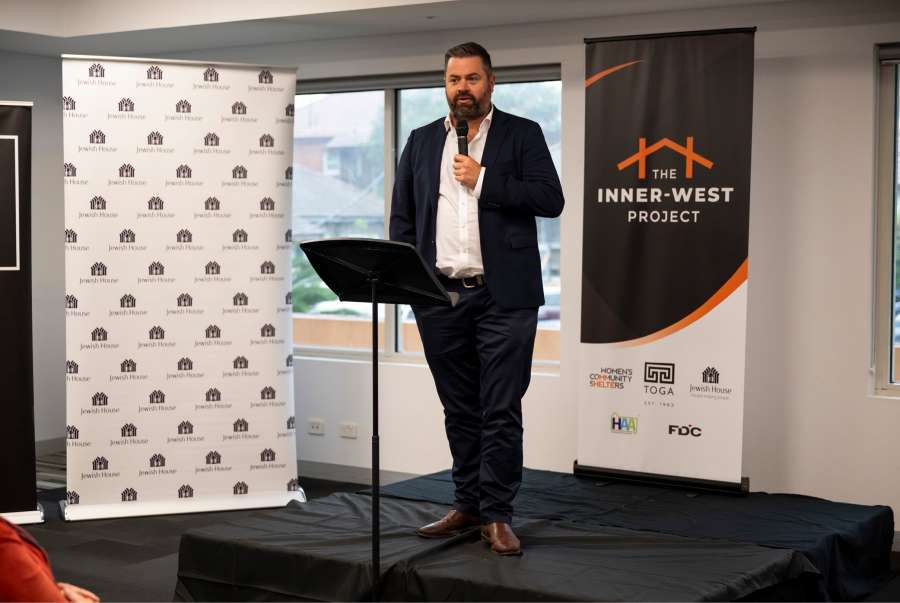
Anchored by a committed group of businesses and charities, the Inner West Project saw FDC work alongside property developers, TOGA Group, Women’s Community Shelters, Jewish House, Housing All Australians and the NSW Government, each bringing something essential from land, expertise and services to funding and networks. TOGA Group contributed the expansive 8,000m² Ashfield site, including several vacant buildings. Jewish House provided more than 50 well-designed rooms for men experiencing or at risk of homelessness, supported by integrated wraparound services including case management, counselling, employment assistance and access to essential items.
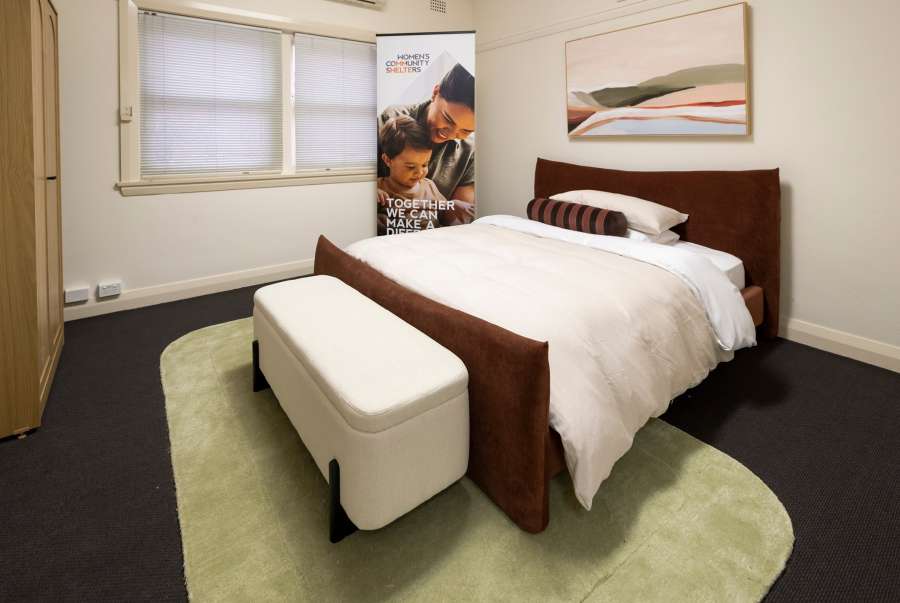
Women’s Community Shelters accommodates around 50 women, children and transgender people each night across nineteen self-contained temporary accommodation apartments and ten transitional housing apartments. Their on-site hub delivers case management, legal clinics, life-skills programs and mental-health support, while also serving women from the wider community.
Through its national pro-bono mobilisation model, Housing All Australians engaged partners across the business community, ensuring vital resources and services were delivered quickly and collaboratively. And FDC led the transformation of the ageing buildings, converting them into safe, welcoming and functional homes.
The Meaning of ‘Made Personal’
FDC’s contribution, amounting to more than $170,000 in building works, materials and volunteer hours, reflected not only the breadth of capability within the fitout and refurbishment team, but the depth of care that at the heart of the business.
Under the guidance of on-the-ground managers and site teams, FDC coordinated and delivered building upgrades, arranged material pathways and tapped into decades-strong subcontractor relationships to bring the project to life. Nalebirch Partitions, Stowe Australia, Mr Water Plumbing, Aspen Commercial Joinery, Master Carpets & Vinyl and TMJ Painting joined in, providing time, materials and skills to help transform the spaces into environment that felt warm, safe and welcoming. Their enduring relationships with FDC meant helping happened instinctively; a true reflection of an ecosystem built on reliability and heart.
Other key community partners, among them Temple & Webster, ReLove, Interface Flooring, Axium, Dulux, ING Bank, Flower Power, Mirvac, Parramatta Cleaning, Marvel Skip Bins, Charter Hall, Target and Kent Removalists, also played an essential role.
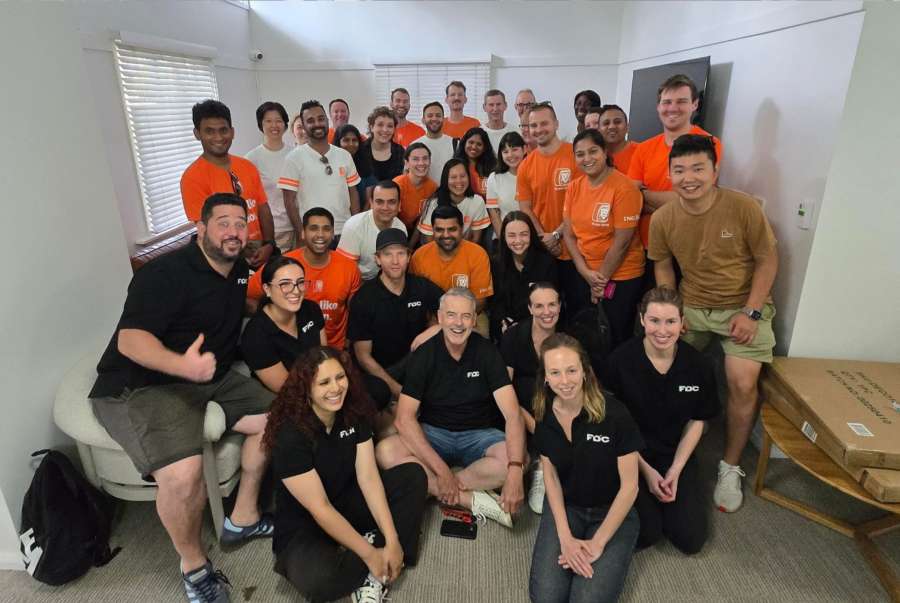
Volunteers from across the business rolled up their sleeves, assembling flatpacks, landscaping, cleaning and preparing units so families could walk into a space that felt like home. FDC also organised a Christmas gift drive in support of Women’s Community Shelters, bringing small but meaningful moments of normalcy and joy to women and children settling into the Ashfield site at the most challenging time of year for crisis services and accommodation. As FDC Managing Director Russell Grady said: “Projects like this remind us that construction is ultimately about people, building places that strengthen communities and change lives.”
Stability, Safety and a Path Forward
Each bed in the Inner West Project represents a fresh start. Families arriving after trauma can move into self-contained apartments with kitchens, bathrooms and laundries. Men supported by Jewish House receive not just a room, but holistic care: counselling, case management, job assistance and community reconnection.
For Soraya Sparrow from Interface Flooring, who experienced homelessness as a child, the project is deeply personal: “The Inner West Project will keep families together in a place that doesn’t feel institutional, but warm, welcoming, safe and supportive. A place like this would have given my family a new sense of hope. It’s the start of a positive journey for women and children to rebuild their lives.”
The Inner West Project is a living example of what can be achieved when goodwill is matched with action. It proves that idle spaces can become life-changing ones, that collective generosity can reshape outcomes, and that the construction industry can be a powerful force for social impact.
Most of all, it reflects FDC’s enduring belief that construction is most rewarding when it’s made personal — built with care, community and purpose at its core.
Celebrating 35 Years + Counting